Moving coal, clinker and fertilizers by rail is the lifeline of many Indian industries. But every time these materials travel in open wagons, they are exposed to rain, dust and wind for hundreds of kilometres. Even a small percentage of loss on each rake can add up to lakhs of rupees by the end of the year.
A simple but highly effective solution is railway wagon covering with heavy‑duty tarpaulins. When it is planned properly, wagon covering ties together three critical priorities for every plant:
This guide explains, in straightforward language, how railway wagon covering works, how it supports coal covering, clinker covering on hire and wider raw material covering, and what you should look for when choosing a supplier in India.
To see how we implement it in the field, visit our service page:
Railway Wagon Covering – Purav Tarpaulins
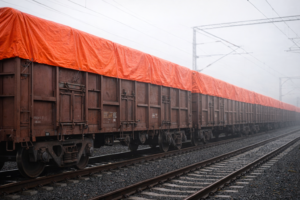
From open wagons to protected cargo
Railway wagon covering means shielding loaded open wagons with strong tarpaulin covers right after loading. The cover is:
The tarpaulin stays in place from the loading point until the rake reaches the destination. Once the cargo is unloaded, the cover is removed, inspected and either reused or replaced.
In many plants, protection starts in the stockyard with coal covering and raw material covering using monsoon sheds or yard tarpaulins. However, if wagons are left open, all that care at the yard can be undone during the journey.
Open wagons carrying coal or clinker lose material in three main ways:
Even 1–1.5% loss on every rake is a huge number over a year. A consistent railway wagon covering system greatly reduces that loss and keeps your dispatched quantity closer to the loaded quantity.
Moisture and contamination change the way materials behave:
When wagons are properly covered, cargo picks up less moisture and arrives closer to contractual specs. That means fewer customer disputes and fewer debit notes for quality differences.
States and railway divisions are increasingly conscious about dust and spillage from open wagons. Dusty cargo:
By covering wagons, you show that your plant takes its environmental responsibility seriously. This complements your raw material covering and monsoon‑shed initiatives inside the factory.
A rake of wagons, neatly lined up and properly covered, creates a very different impression compared to a messy, partially covered rake. Customers notice. Consistent railway wagon covering sends a clear message: you care about the material even after it leaves your gate.
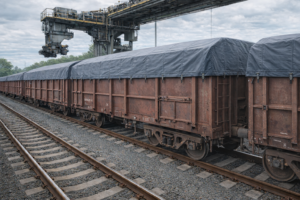
Choosing the right tarpaulin is at the heart of any successful wagon covering system.
High‑density polyethylene (HDPE) tarpaulins are the most widely used covers for:
Their advantages:
Typical specs used for railway wagon covering:
PVC‑coated polyester fabrics are thicker and more expensive, but:
Some plants choose PVC for longer‑term clinker covering on hire or when they want to circulate the same covers across several rakes.
Regardless of type, look for:
A vendor who is already handling coal covering and raw material covering projects will usually know what combination of GSM and reinforcement works best for your cargo and route.
In many yards, teams are initially worried that covering wagons will slow them down. Once a simple, standard method is introduced, the process becomes smooth.
Standardising this process, and integrating it with your coal covering and raw material covering routines, can turn wagon protection into a predictable, repeatable operation.
From our experience working at various loading points, a few simple improvements make a big difference:
Plants that follow these basics usually report that the extra time spent on railway wagon covering is small compared to the savings and peace of mind it brings.
Rail wagon protection should not stand alone. It works best when it becomes part of a broader approach to raw material covering.
A typical integrated setup could look like this:
Yard protection:
Truck covering:
Railway wagon covering:
Destination yard protection:
If you already use clinker covering on hire or temporary sheds, it makes operational sense to use the same experienced vendor for wagon covers as well, so standards remain consistent end‑to‑end.
Not every tarpaulin trader is equipped to handle railway wagon covering projects. Look for suppliers who:
Purav Tarpaulins has spent decades helping Indian industries protect their materials from weather and loss. Our work ranges from monsoon sheds and raw material covering to clinker covering on hire and, of course, railway wagon covering.
For wagon projects, we provide:
You can see examples of our installations and learn more about our approach here:
Railway Wagon Covering – Purav Tarpaulins [[link]]
Railway wagon covering is the practice of shielding loaded open wagons with strong tarpaulin covers to protect cargo from rain, wind and dust. It is needed because materials like coal, clinker and fertilizers are sensitive to moisture and loss. Proper covering reduces wastage, maintains quality and supports compliance with environmental expectations.
For coal covering on railway wagons, UV‑stabilised HDPE tarpaulins in the 200–300 GSM range are widely used. They are light enough to handle on top of wagons but strong enough to withstand rough coal surfaces and Indian weather. For very heavy reuse, PVC‑coated fabrics can be considered.
Yes. Many plants opt for clinker covering on hire as a complete package: yard sheds, truck tarpaulins and railway wagon covers supplied and maintained by the same vendor. This ensures consistent quality and simplifies coordination during the monsoon.
Raw material covering protects your stockpiles, bins and conveyors inside the plant, while railway wagon covering protects the same materials during transport. Using both together gives you a continuous chain of protection—from stockyard to customer—reducing losses and quality issues at every stage.
When first introduced, loading teams sometimes feel wagon covering will delay dispatch. In practice, once covers are standardised and crews are trained, the additional time is small. With pre‑measured covers, clear tying points and a simple checklist, covering becomes just another step in the loading cycle.
For Indian plants handling coal, clinker and fertilizers, railway wagon covering is no longer an optional “extra”. It is a practical, proven way to:
When you integrate wagon covering with wider coal covering, clinker covering on hire and raw material covering systems, you create a solid protection chain from yard to destination.
If you’d like to explore a wagon‑covering system for your loading station or plant, share your wagon types, cargo details, approximate rake frequency and route conditions with our team at Purav Tarpaulins. We’ll help you design the right combination of tarpaulin grade, sizes and fixing methods so your cargo moves securely—rain or shine—anywhere in India.